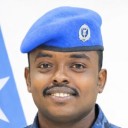
A Prosecutorial Submission Following a Fatal Road-Traffic Incident in Mogadishu
Mohamed Abdullahi Khalif | Prosecutor
24 October 2024 | Mogadishu, Somalia
Overview
On 24 October 2024, during court proceedings concerning a fatal road-traffic incident, I delivered a prosecutorial submission addressing both the alleged conduct of the accused and a broader public-safety concern involving the operation of some military vehicles on the public roads of Mogadishu.
According to the case presented before the Court, the accused was a member of the military who had been driving a military vehicle when it struck an elderly woman crossing the road. The prosecution alleged that the vehicle was being driven at excessive speed and without sufficient control. The woman subsequently died as a result of the incident.
The case therefore involved more than an ordinary traffic violation. A life had been lost, and the circumstances raised an important question about the responsibility of military drivers when operating vehicles on roads shared every day with pedestrians, families and civilian motorists.
A central point in my submission was that the driver remains responsible for maintaining control of the vehicle. The fact that a vehicle is capable of travelling at high speed does not mean that such speed is appropriate or lawful on a public road. A driver must consider the surrounding environment, pedestrians, other vehicles, traffic conditions and the ability to react safely to unexpected circumstances.
I used the individual case to draw the Court's attention to four wider practices involving some military vehicles that were creating serious risks for civilian road users in Mogadishu.
The first concern was the practice of firing weapons at or near civilian vehicles to force motorists to move aside when a military vehicle approached. Military and civilian vehicles share the same public roads, and the use of gunfire to obtain priority can place drivers, passengers, pedestrians and other members of the public in immediate danger.
The second concern involved the discharge of weapons during traffic congestion. When civilian vehicles are caught in heavy traffic, drivers may simply have nowhere to move. Firing weapons to force them to create a passage can cause panic, unsafe movements and potentially fatal consequences. Traffic congestion cannot justify unnecessarily exposing members of the public to such danger.
The third concern—and the issue most directly connected with the case before the Court—was excessive speed.
A military vehicle driven at excessive speed can become difficult to control when a pedestrian crosses the road, another vehicle changes direction or an unexpected obstruction appears. The mechanical ability of a vehicle to reach a particular speed does not relieve its driver of the responsibility to choose a safe speed appropriate to the road and surrounding conditions.
According to the prosecution case, the accused's alleged failure to maintain sufficient control of the vehicle resulted in the elderly woman being struck and subsequently dying.
The fourth concern involved improper lane use and attempts to obtain road priority outside the normal flow of traffic.
I raised concerns about military vehicles leaving their proper lanes, entering lanes intended for traffic travelling in the opposite direction, crossing the normal flow of vehicles or using parts of the road where they did not have lawful priority. Such conduct can confuse other motorists, disrupt traffic and substantially increase the risk of serious collisions.
My submission was not intended to suggest that every military driver engages in these practices. Rather, the purpose was to use the circumstances of the case before the Court to address dangerous conduct that required greater discipline, accountability and respect for civilian road users.
The central principle I advanced was straightforward: a military vehicle is not automatically exempt from the rules designed to protect people using public roads.
Members of the Armed Forces perform important national-security responsibilities, but those responsibilities do not remove the obligation to protect civilian life when operating vehicles in public spaces.
A military driver remains responsible for the vehicle under his control. Institutional status should not be treated as permission to drive at dangerous speeds, disregard lane discipline, unnecessarily interfere with civilian traffic or use weapons to obtain priority on ordinary public roads.
I therefore asked the Court to issue a firm judicial decision addressing both the fatal circumstances of the individual case and the wider public danger represented by these practices.
The message I sought to place before the Court was that military vehicles should comply with applicable road rules, drivers should maintain sufficient control of their vehicles, excessive speed should be addressed, proper lanes and the lawful flow of traffic should be respected, and weapons should not be used to force civilian road users to give way.
The case was significant because it connected an individual fatal incident with the broader principle of public accountability.
Military discipline is not limited to conduct inside military installations or during operations. It also extends to how service members exercise authority and responsibility when interacting with the civilian population.
When a member of the military operates a vehicle on a public road, the safety of pedestrians and other road users remains an important responsibility.
For me as a prosecutor, the submission therefore concerned more than establishing responsibility in one case. It was also about using the judicial process to reinforce a wider principle:
Military service carries authority, but it also carries responsibility. Public roads are shared spaces, and protecting civilian life must remain central to the way military vehicles are operated.
A clear judicial response could address the circumstances of the case before the Court while also helping prevent similar deaths, injuries and damage in the future.
Courtroom Video
Original Language: Somali
Date: 24 October 2024
Speaker: Mohamed Abdullahi Khalif
Role: Prosecutor
Location: Mogadishu, Somalia
Proceeding: Fatal Road-Traffic Case Involving a Military Vehicle
The video below contains part of the prosecutorial submission I delivered before the Court concerning the fatal road-traffic incident and the wider public-safety issues associated with the operation of some military vehicles on the streets of Mogadishu.
Because the original presentation was delivered in Somali, an English transcript and translation is provided below for international viewers.