Explaining the Alleged Use of a Location-Sharing Application Following a Fatal Attack
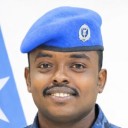
Mohamed Abdullahi Khalif | Prosecutor
19 June 2024 | Somalia
Overview
On 19 June 2024, during criminal proceedings before the Court, I delivered a technical explanation concerning what the prosecution presented as an evolving method in Al-Shabaab's use of digital technology in connection with its operations.
The case concerned a defendant accused of killing a traditional elder and an armed security officer accompanying him. According to the prosecution case, the attack was motivated by extremist beliefs that had been communicated to the defendant.
During the incident, the accompanying security officer responded to the attack and managed to wound the alleged attacker before he himself died. The defendant therefore survived the incident but sustained a gunshot injury.
According to the evidence presented during the proceedings, after carrying out the attack, the wounded defendant contacted an Al-Shabaab superior and reported that he had been injured and that the killing mission had been carried out.
The circumstances that followed introduced an important digital and technological element into the case.
According to the prosecution case, the superior arranged for another individual associated with the group, who worked as a bajaj (motorised rickshaw) driver, to collect the wounded defendant and assist him in leaving the area. His ordinary work as a bajaj driver was allegedly being used as a form of civilian cover for his movements.
A practical problem, however, arose: the driver did not know exactly where the wounded defendant was hiding.
The prosecution evidence indicated that an application referred to during the proceedings as Digital Campus was then used to assist in establishing and sharing the relevant location information. The superior, the wounded defendant and the driver used the application in connection with the effort to locate the injured defendant.
According to the case presented before the Court, this enabled the superior, despite not being physically present in Mogadishu, to use location and mapping information to guide the driver towards the area where the wounded defendant was located.
The driver subsequently reached the defendant and collected him.
Somali security authorities had, however, been following the situation. They intercepted the individuals and arrested both the wounded defendant accused of carrying out the killings and the driver who had allegedly been sent to collect him and assist his escape.
Following his arrest, the injured defendant was provided with medical treatment for the wound he had sustained during the incident. His condition required substantial medical care, including several surgical procedures.
He remained under medical treatment until his condition improved sufficiently. Once he had recovered and was medically able to participate in the judicial process, he was brought before the Court to face the criminal charges against him.
This sequence was an important part of the wider case: the defendant was apprehended alive despite his injuries, received the medical treatment required for his condition, underwent several operations, recovered, and was subsequently brought before the judicial system.
The technological element of the case was particularly important to my presentation before the Court.
The application itself was not the alleged crime. Rather, its evidential significance arose from how the prosecution alleged that digital technology had been used to coordinate individuals in different locations following the attack.
It was therefore important for the Court to understand both the factual sequence of events and the technology involved.
During my presentation, I explained the application referred to in the proceedings as Digital Campus, the functions relevant to the evidence before the Court, and the general concept of how location and mapping technology can enable people in different places to coordinate around geographical information.
This helped connect the digital evidence with the sequence of physical events presented in the prosecution case: the attack, the injury of the alleged attacker, his communication with his superior, the effort to locate him, the arrival of the bajaj driver, their interception and arrest, the defendant's subsequent medical treatment and recovery, and finally his appearance before the Court.
The case demonstrated why modern terrorism-related prosecutions increasingly require an understanding not only of conventional physical evidence but also of mobile applications, digital communications, location information and other forms of technological evidence.
For a prosecutor, presenting this type of evidence requires more than simply identifying an application or demonstrating that a mobile device was used. The Court must be able to understand what the technology is, what function of that technology is relevant to the case, and how the digital evidence connects the individuals, communications and events alleged by the prosecution.
My purpose in explaining the technology was therefore to translate an unfamiliar technical subject into clear courtroom language and connect it directly with the evidence and factual circumstances before the Court.
The case also illustrated a broader challenge confronting modern criminal justice institutions: ordinary digital technologies can potentially be misused in connection with serious criminal activity. This makes the ability to identify, investigate, interpret and clearly present digital evidence increasingly important to effective prosecution.
Courtroom Video
Original Language: Somali
Date: 19 June 2024
Speaker: Mohamed Abdullahi Khalif
Role: Prosecutor
Subject: Digital Technology and Location Evidence in a Terrorism-Related Criminal Case
The video below contains part of the explanation I delivered before the Court concerning the technological element of the case and why understanding the application referred to during the proceedings was relevant to evaluating the evidence.
Because the original presentation was delivered in Somali, an English transcript and translation can be presented separately for international viewers.